The Korean martial arts are the fighting arts that developed in Korea. They include Tae Kwon Do, Hapkido, Tang Soo Do, Taekkyeon and Ssireum. Tae Kwon Do and Tang Soo Do teach kicks, punches and forms, Hapkido mixes kicks and strikes with joint locks and throws, Taekkyeon moves in a flowing, dance-like rhythm, and Ssireum is wrestling.
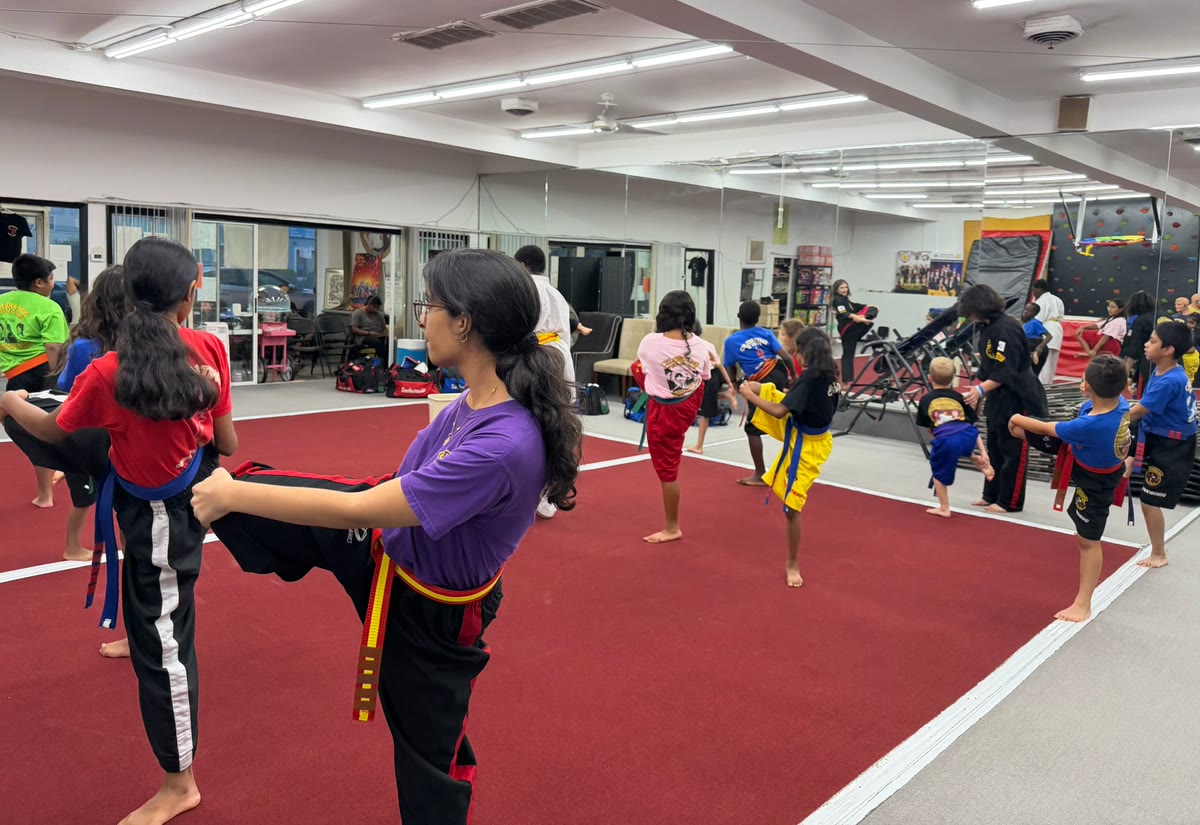
Chung TKD in New Hyde Park teaches one of them, Tae Kwon Do, to children ages 2 to 13. Grandmaster Howard Chung, 9th Dan, has taught Tae Kwon Do since 1970 and opened the school in 1984. This guide is by Master Chris J. Chung, 5th-degree black belt.
What are the Korean martial arts?
Here are the main ones, with what each is known for. The general facts come from Wikipedia's entries on Korean martial arts, Hapkido, Tang Soo Do, Taekkyeon and Ssireum.
- Tae Kwon Do. A Korean striking art known for its fast, high and varied kicks, including jumping kicks. It is the national martial art of both North and South Korea and an Olympic sport. Our guide to what Tae Kwon Do is covers it in full.
- Hapkido. A self-defense art that mixes joint locks, throws and chokeholds with kicks and punches.
- Tang Soo Do. A striking art of kicks, punches and forms, based on karate as it was taught to Koreans during the Japanese occupation.
- Taekkyeon. A traditional art of flowing, rhythmic, dance-like movement, with kicks and sweeps that trip or throw a partner. It is also written taekkyon. UNESCO lists it as intangible cultural heritage, the first martial art on that list.
- Ssireum. Korean folk wrestling. Two wrestlers hold each other's cloth belt, called a satba, and a wrestler wins by bringing any part of the other's body above the knee to the ground. UNESCO lists it too, after a joint application by North and South Korea.
- Other arts. Kuk Sool and Hwa Rang Do are newer arts that blend many sources. Kumdo is Korean sword training, and Gungdo is traditional Korean archery.
What is Hapkido?
Hapkido is a Korean martial art of self-defense that mixes joint locks, throws and chokeholds with kicks and punches. Wikipedia's Hapkido entry says the name is often translated as the way of coordinating energy, and that the art stresses circular motion, redirecting force and control of the other person. It grew from a Japanese art that Choi Yong-sool brought home to Korea after World War II, and his students added kicks and strikes from Taekkyeon and Tang Soo Do. Where Tae Kwon Do is known for its kicks, Hapkido is well known for its wristlocks.
What is Tang Soo Do?
Tang Soo Do is a Korean martial art of kicks, punches and forms, based on karate as it was taught to Koreans during the Japanese occupation, with later Korean influences. Wikipedia's Taekwondo entry translates the name as Chinese hand way. The Tang Soo Do entry says it became the basis for Tae Kwon Do when the Korean schools, called kwans, united in the middle of the twentieth century, and that many kept teaching Tang Soo Do under its own name. So the two arts share roots, and today each has its own name and its own forms.
What is Korean karate?
Korean karate is an older name, not an art of its own. Wikipedia's Taekwondo entry says Tang Soo Do was the term used for Korean karate until the kwans agreed on one art, and its Korean martial arts entry says Tang Soo Do was sometimes taught outside Korea under that name. Wikipedia's Korean karate page lists both Tae Kwon Do and Tang Soo Do among the arts the name can mean. So if a school or a relative says Korean karate, ask which art they mean. Karate itself is Japanese, and our guide to Tae Kwon Do vs karate compares the two. If you started out looking for karate for your child, read kids karate classes and Tae Kwon Do.
How do I choose a Korean martial art for my child?
Start with what your child would enjoy doing. Tae Kwon Do and Tang Soo Do build kicks, punches and forms, Hapkido builds locks, throws and self-defense, Taekkyeon builds footwork, and Ssireum is wrestling. Then ask a school near you what its classes teach, using the questions below. Our guide to which martial art is best for kids compares Tae Kwon Do with karate, judo, Brazilian jiu-jitsu and kung fu.
What should I ask a school that teaches a Korean martial art?
Ask these five questions, by phone or on a visit. The answers tell you which art your child would learn and how it is taught.
- Which art do you teach, by name? A sign that says martial arts or Korean karate can mean more than one art.
- Which style do your forms come from? In Tae Kwon Do, the style decides which forms a child learns.
- Does class center on kicks and strikes, on locks and throws, or on wrestling?
- Who teaches the classes, and which line of teachers does the school come from?
- Can my child try a class before we sign up?
How does Chung TKD answer those questions?
Here are the school's answers, in the same order.
- Tae Kwon Do, the Korean martial art.
- Color belts learn the ITF forms, called hyung, and Kwang-Gae and Koryo are the black belt forms.
- Kicks and strikes. Children learn kicks, punches, blocks and forms, and self-defense is part of class.
- The school's instructors teach the classes. Grandmaster Chung runs every belt test and trained in the direct lineage of Supreme Grand Master Jhoon Rhee, widely known as the father of American Tae Kwon Do.
- Yes. New families start with two free trial classes, and a parent or guardian stays for both.
How do we get started?
Chung TKD has three programs by age. Pee-Wee is for ages 2 to 3, Children is for ages 4 to 6 and Youth is for ages 7 to 13. For a trial class, kids wear something comfortable, sweats or shorts, and the uniform comes if they sign up.
Looking for Korean martial arts classes for kids near New Hyde Park? Chung TKD is at 1527 Jericho Turnpike, New Hyde Park, NY 11040. Book a free class online.
Questions parents ask
What is the oldest Korean martial art?
Wikipedia's Taekkyeon entry says Taekkyeon is often considered the oldest martial art of Korea, and its Korean martial arts entry says Ssireum is probably the oldest. UNESCO lists both as intangible cultural heritage.
Are Hapkido and Tang Soo Do the same as Tae Kwon Do?
No. All three are Korean, and each is its own art. Tang Soo Do shares roots with Tae Kwon Do, and Hapkido adds joint locks and throws.
What did Korean karate mean?
It was an older name for the karate-based arts taught in Korea, such as Tang Soo Do, before the Korean schools agreed on one art. The name can mean Tae Kwon Do or Tang Soo Do, so ask a school which art it teaches.
Which Korean martial art does Chung TKD teach?
Tae Kwon Do, to children ages 2 to 13, in New Hyde Park.
Are the first two classes at Chung TKD free?
Yes. New families start with two free trial classes, and a parent or guardian stays for both.