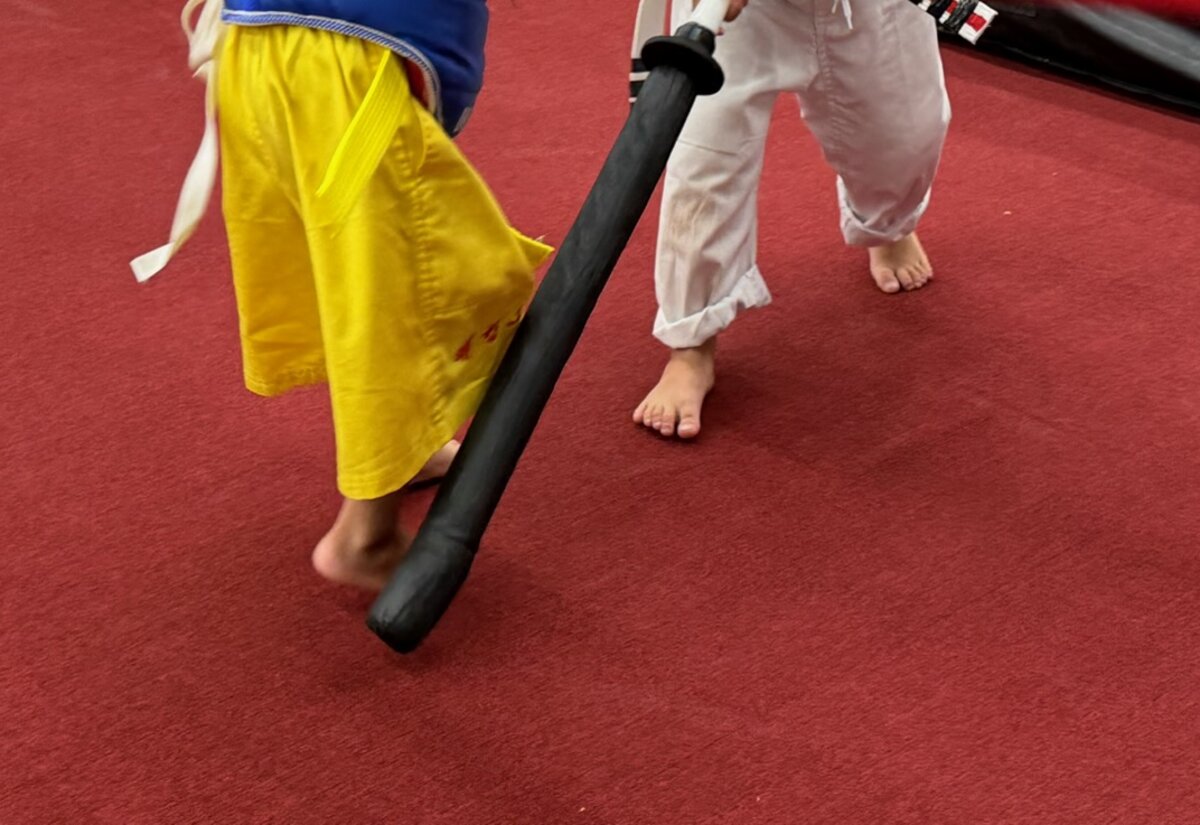
Tae Kwon Do is a Korean martial art of kicks and punches thrown at a distance, and it suits a child who loves to kick, jump and move fast. Judo is a Japanese martial art of throws, falls and holds practiced up close with a partner, and it suits a child who likes to wrestle, roll and tumble.
How do Tae Kwon Do and judo compare for kids?
They differ most in the kind of contact, the age children start and the gear a family buys.
- Age to start. Tae Kwon Do at Chung TKD starts at 2, in the Pee-Wee class. For judo, the International Judo Federation calls 6 or 7 the ideal age for a first class, and some clubs run play classes from 3.
- What kids learn. Tae Kwon Do teaches kicks, punches, blocks and forms, the set patterns of moves a student learns for each belt. Judo teaches how to fall safely, then how to throw a partner and hold them down on the mat.
- Contact. In Tae Kwon Do, contact comes from kicks and punches, and partners wear pads to spar. Judo has no kicks or punches in practice or matches, and its contact is gripping, throwing and pinning a partner.
- Belts. Tae Kwon Do and judo both use colored belts on the way to black belt, and the colors and their order change from one school or organization to the next. In judo, a child who starts at 6 earns about one belt a year and reaches brown belt around 14, the International Judo Federation says.
- Cost of gear. Both arts start with a uniform and belt. In Tae Kwon Do, the next cost is sparring pads, and the style sets how many pieces a family buys. ITF Tae Kwon Do usually pads only the hands and feet, while World Taekwondo, the Olympic style, adds a head guard, a chest protector and forearm, shin and groin guards, as Wikipedia's Taekwondo entry describes. In judo, the uniform is most of the cost, since judo uses no pads. A thick double-weave judo uniform generally costs considerably more than a thinner single-weave one, Wikipedia's Judogi entry notes.
Chung TKD in New Hyde Park teaches Tae Kwon Do to children ages 2 to 13. Classes cover kicks, self-defense and the ITF forms, called hyung, and Grandmaster Howard Chung, 9th Dan, runs every belt test.
What does a child learn in Tae Kwon Do?
A child in Tae Kwon Do learns to kick, punch and block, and learns a form for each belt. The name, also written taekwondo, tells you the focus: tae means to strike with the foot, kwon to strike with the hand, and do the way, as the Taekwondo entry on Wikipedia explains. Tae Kwon Do comes from Korea, is an Olympic sport and is known for high, jumping and spinning kicks.
At Chung TKD, color belts learn the ITF forms, called hyung, and black belts learn the forms Kwang-Gae and Koryo. Self-defense is part of class. A child earns a stripe on their belt for a class where they went over their curriculum. Below brown belt, a child tests for the next belt when the instructors judge them ready. Grandmaster Chung runs the test, and the instructors demonstrate. Our guide to the belt colors in order has the full list.
What does a child learn in judo?
A child in judo learns to fall safely first, then to throw a partner and hold them down on the mat. Judo means the gentle way in Japanese. Jigoro Kano created it in Japan more than 140 years ago, and it is an Olympic sport, as the International Judo Federation's history records.
Practice starts with breakfalls, the safe ways to land, because every throw ends with someone on the mat. Judo has no punches or kicks outside of set demonstration forms, as the Judo entry on Wikipedia explains. Chokes and arm locks are part of judo for older students, and junior rules hold them back. Under the United States Judo Federation's tournament rules, children 12 and under may not use chokes, and arm locks are allowed only in the black belt and veterans divisions.
Which is safer for kids, Tae Kwon Do or judo?
Both can be taught safely to children, and the instructor and the class matter more than the name of the art. The contact is different. Judo puts a child on the mat again and again, which is why it teaches falling before throwing. Tae Kwon Do keeps partners apart, and children wear pads when they spar. At a trial class, watch how the instructors pair children and how hard they let them go.
Which is better for self-defense?
Both teach self-defense, at different distances. Judo teaches a child to keep their balance and get free of a grab up close. Tae Kwon Do teaches a child to keep their distance and get away. At Chung TKD, self-defense is part of class.
Which fits at each age, Tae Kwon Do or judo?
The answer changes with age, because the two arts start children at different times.
- Ages 2 and 3. Tae Kwon Do at Chung TKD starts here, in Pee-Wee. A child begins in the Mommy & Me class and moves up to the independent class at 3½. In judo, the International Judo Federation describes play classes from 3, with first rolls and crawls rather than throws.
- Ages 4 to 6. At Chung TKD, children this age take the Children class. In judo, most of this range comes before the 6 or 7 that the International Judo Federation suggests for a first class.
- Ages 7 to 13. Tae Kwon Do at Chung TKD continues in the Youth class, and a child can move up from Children sooner when the staff think they are ready. In judo, children this age learn throws and holds, and junior rules keep chokes out of matches through age 12.
How do you choose between Tae Kwon Do and judo?
Start with what your child already loves to do, then let a first class settle it.
- A child who is always kicking a ball or jumping off the couch may take to Tae Kwon Do.
- A child who loves rough-and-tumble play and wrestling with a sibling may take to judo.
Either way, watch one class. If your child asks to go back, you have your answer. If you are also weighing karate, read Tae Kwon Do vs karate. Our guide to what to expect at a first class walks through a first visit.
Trying Tae Kwon Do at Chung TKD
Every new family starts with two free trial classes, and a parent or guardian stays for them. Children wear something comfortable, sweats or shorts, and the uniform comes when a family signs up.
Questions parents ask
Is Tae Kwon Do or judo better for kids?
Neither is better for every child. Tae Kwon Do suits a child who loves to kick and move fast, and judo suits a child who likes to wrestle and roll.
What age can a child start judo?
The International Judo Federation calls 6 or 7 the ideal age for a first judo class, and some clubs run play classes from 3.
What age can a child start Tae Kwon Do at Chung TKD?
At 2, in the Pee-Wee class. Children 4 to 6 take the Children class, and children 7 to 13 take Youth.
Does judo have kicks or punches?
No. Judo practice and matches have no strikes. Judo is throws, holds and falls.
What sparring gear does Tae Kwon Do use?
It depends on the style. ITF Tae Kwon Do usually pads only the hands and feet, and World Taekwondo, the Olympic style, adds a head guard, a chest protector and forearm, shin and groin guards. At Chung TKD, children wear sweats or shorts to their two free trial classes.